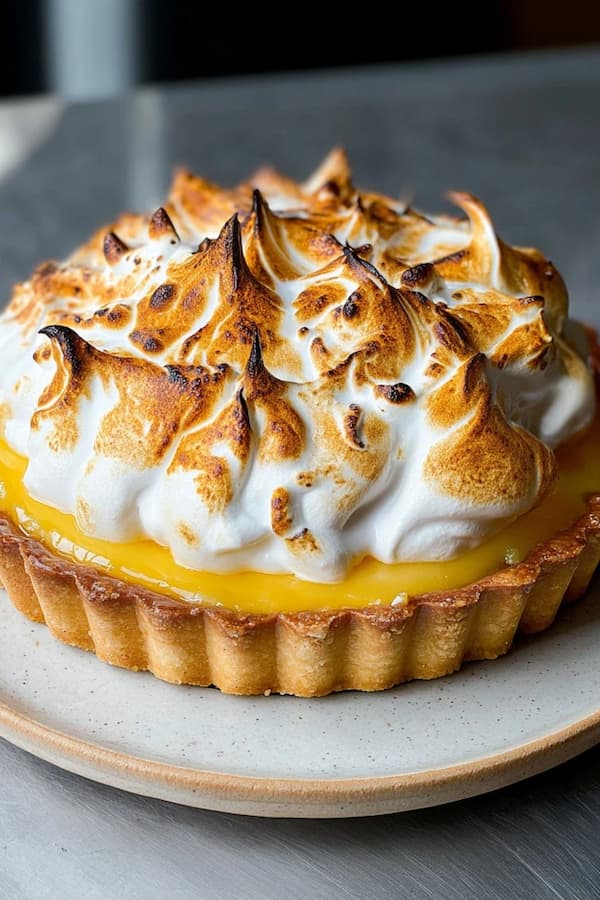
Mastering a lemon meringue pie is a true badge of honor for any home baker. It is a dish of contrasts, featuring a sharp citrus filling topped with a cloud of toasted, sweet marshmallow-like foam.
While it looks complicated on a dessert pedestal, the process is actually very logical once you break it down into three simple stages.
Ingredients
This recipe makes 1 nine-inch pie, which serves 8 people. Make sure your eggs are at room temperature before you start, as this helps the meringue reach its full volume.
- 1 pre-baked 9-inch pie crust (homemade or store-bought)
- 1.5 cups white granulated sugar
- 1/2 cup cornstarch
- 1.5 cups cold water
- 1/2 cup fresh lemon juice
- 3 teaspoons lemon zest
- 4 large egg yolks (save the whites for the topping)
- 3 tablespoons unsalted butter
- 4 large egg whites (at room temperature)
- 1/2 teaspoon cream of tartar
- 1/2 cup extra sugar (for the meringue)
- 1 pinch of salt
The Vision
Lemon meringue pie is all about balance. If the lemon layer is too sweet, the pie feels heavy; if the meringue is too thin, it loses that dramatic look. We want a bottom layer that is tart enough to make your mouth water and a top layer that is tall, stable, and golden brown.
The biggest fear most bakers have is “weeping,” which is when a layer of water forms between the lemon and the meringue. I will show you how to avoid that by using a specific timing method. This pie is a showstopper because it combines a crunch from the crust, a silkiness from the curd, and a soft airiness from the topping. It is the perfect end to a heavy meal.
The Thickener
In a medium saucepan, whisk together your sugar, cornstarch, salt, and water. Turn the heat to medium and stir constantly. You will notice the liquid go from cloudy to clear and thick. This is the cornstarch doing its job.
It is important to let this mix come to a light boil for about one minute. This “activates” the starch so your pie stays firm enough to slice later on without falling apart.
Tempering Yolks
In a small bowl, beat your four egg yolks. Now, here is the vital part: do not just pour the cold yolks into the hot sugar mix, or you will get sweet scrambled eggs. Instead, take a small ladle of the hot liquid and slowly whisk it into the yolks.
This warms them up gently. Once the yolks are warm, you can safely pour the yolk mixture back into the main pot. Cook for two more minutes while stirring.
Citrus Finish
Take the pot off the stove. Now is the time to add your lemon juice, lemon zest, and butter. Stir until the butter is melted and the mix is glossy.
We add the lemon at the end because heat can sometimes dull the fresh flavor of the juice. Pour this hot filling directly into your pre-baked pie crust. Keep the filling hot; this is a secret trick that helps the meringue stick to the bottom layer.
Making Foam
Clean your mixing bowl thoroughly. Even a tiny drop of fat or yolk will stop your egg whites from fluffing up. Beat the egg whites and cream of tartar on medium speed until soft peaks form.
Soft peaks look like waves that slump over when you lift the whisk. The cream of tartar is a mild acid that stabilizes the tiny air bubbles you are creating.
Adding Sugar
With the mixer still running, add your remaining half-cup of sugar one tablespoon at a time. Crank the speed up to high. You are looking for “stiff peaks.”
This means the foam should stand straight up like a mountain when you lift the whisk. It should also look very shiny, like white satin. If you rub a bit of the foam between your fingers, you should not feel any grains of sugar.
The Assembly
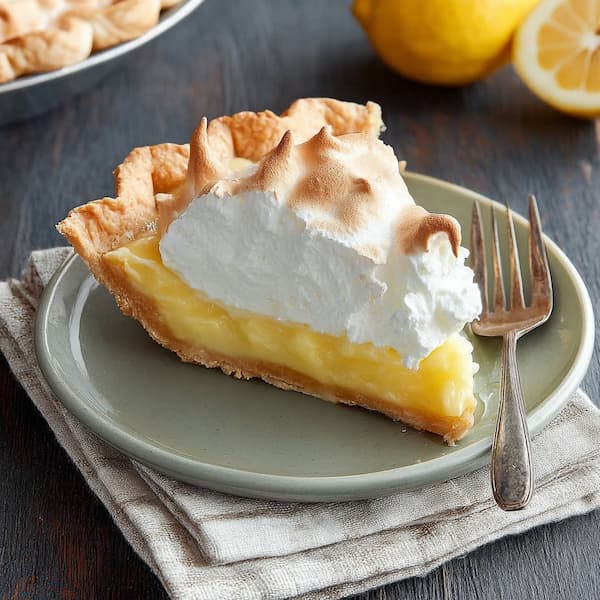
Spread the meringue over the hot lemon filling. Start at the edges. Make sure the meringue touches the crust all the way around the circle. This “anchors” the foam so it does not shrink inward as it bakes. Use a spoon to make swirls and peaks on the top.
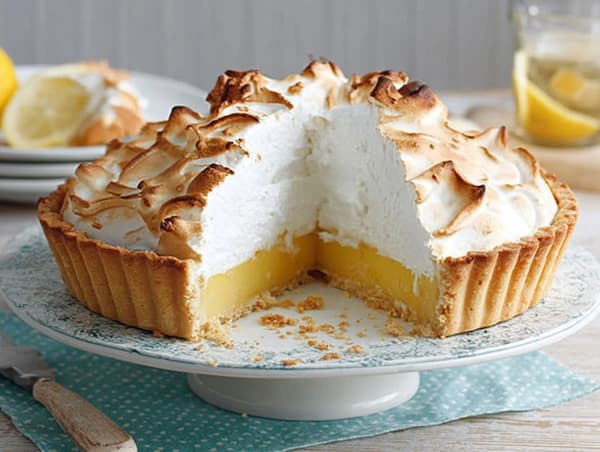
Bake at 350°F for about 10 to 12 minutes. Watch it closely; you want the tips of the peaks to be a beautiful toasted brown.
Better Flavor
For the best results, use fresh lemons. The bottled juice you find in the store often contains preservatives that give the pie a metallic taste. Since lemon is the main star here, the quality of the juice matters. I also suggest using a high-quality butter.
The fat in the butter is what gives the lemon filling that “melt-in-your-mouth” feeling.
If you want to add a little twist, you can add a tiny bit of vanilla extract to your meringue. It makes the topping taste more like a marshmallow. Also, make sure your pie crust is fully cooled before you put the hot filling inside. This keeps the bottom of the crust from becoming soggy while the pie sets.
Common Pitfalls
The most common issue is the meringue pulling away from the sides. As mentioned, the fix is to make sure you spread the egg whites so they actually touch the pastry edge. This creates a seal.
Another issue is the meringue “beading,” which looks like tiny amber droplets on the surface. This usually happens if you overbake the pie or if the humidity in your kitchen is very high.
If your lemon filling is too runny, it is usually because the cornstarch did not get hot enough. It needs to reach a full boil for a short time to set properly. Do not be afraid of the bubbles in the pot; as long as you are stirring, it will not burn.
Why Does My Meringue Always Get Watery On The Bottom?
This is called “weeping,” and it usually happens when the meringue is placed on a cold filling. By putting the egg whites on the lemon filling while it is still steaming hot, you actually start cooking the bottom of the meringue immediately.
This creates a bond between the two layers and prevents moisture from trapped in between. If you let the lemon filling cool down completely before adding the topping, the two layers will never truly “join,” and water will pool in the gap.
How Can I Get A Clean Slice Without The Pie Falling Apart?
The secret to a perfect slice is patience. You must let the pie cool at room temperature for at least one to two hours. After that, put it in the refrigerator for another three to four hours. This gives the cornstarch and the egg yolks time to fully solidify.
If you cut into the pie while it is still warm, the lemon filling will run out like a sauce. Also, when you are ready to cut, use a wet, sharp knife. Wipe the blade clean and re-wet it between every single slice to keep the meringue from sticking to the metal.
Why This Lemon Meringue Is Always a Hit?
Lemon meringue pie is a classic for a reason. It is bright, beautiful, and tastes like a celebration. While it requires a few different steps, none of them are particularly difficult if you take your time. There is a great sense of pride in seeing those golden peaks come out of the oven.
Once you have the basic recipe down, you can experiment with the height of your meringue or the tartness of your lemon. It is a fun dessert to make for a Sunday dinner or a spring holiday. It brings a bit of light to the table every time. Just remember to watch the oven closely at the end, as the difference between golden brown and burnt happens in a matter of seconds.
Ingredients
Method
- In a medium saucepan, whisk together1.5 cups sugar, cornstarch, salt, and water. Cookover medium heat, stirring constantly. Once the liquid turns from cloudy toclear and thick, let it reach a light boil for 1 minute to activate thestarch.
- In a medium saucepan, whisk together1.5 cups sugar, cornstarch, salt, and water. Cookover medium heat, stirring constantly. Once the liquid turns from cloudy toclear and thick, let it reach a light boil for 1 minute to activate thestarch.
- Removethe pot from the heat. Stir in the lemon juice, lemon zest, and butteruntil melted and glossy. Immediately pour the hot filling into your pre-baked,cooled pie crust
- Remove the pot from the heat. Stir in the lemon juice, lemon zest, and butteruntil melted and glossy. Immediately pour the hot filling into your pre-baked,cooled pie crust
- With the mixer running, add the 1/2cup sugar one tablespoon at a time. Increase speed to high and beat untilstiff, shiny peaks form (the foam should stand straight up). Ensure no sugargrains remain.
- Spread the meringue over the hotfilling. Crucial: Spread the meringue all the way to the edges so ittouches the crust; this anchors it and prevents shrinking. Use a spoon tocreate decorative swirls.
- Bake at 350°F (177°C) for 10to 12 minutes. Watch closely—remove once the peaks are a beautiful toastedbrown.
Notes
- The “No-Weep” Trick: Putting meringue on hot filling creates a bond that prevents that annoying layer of water from forming.
- Avoid Fat: Even a speck of yolk or oil in your whisking bowl will prevent the egg whites from fluffing up.
- Fresh is Best: Avoid bottled lemon juice; the preservatives can leave a metallic aftertaste.