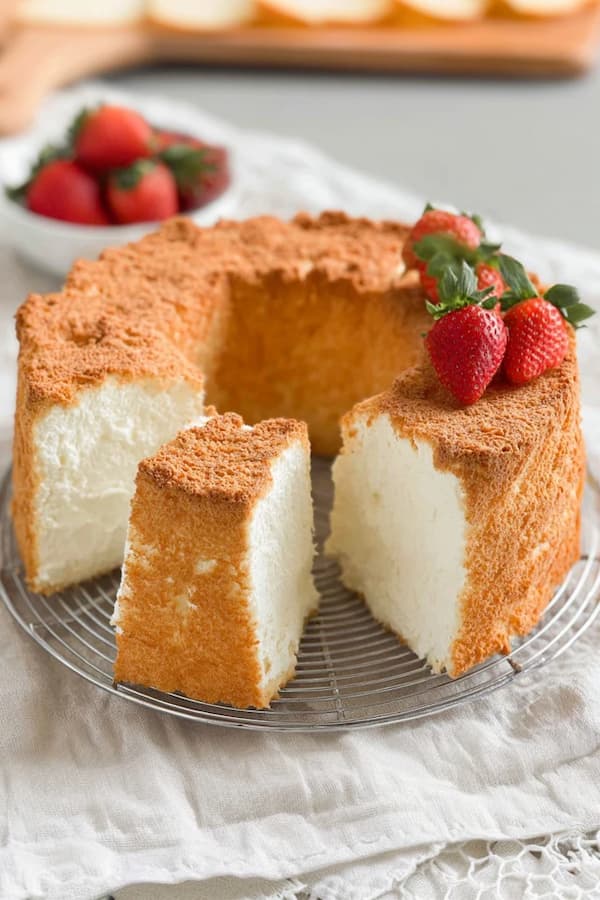
Angel food cake is a dessert that relies entirely on air and structure rather than fat or leavening agents like baking powder. It is famously light, snow-white on the inside, and has a delicate sweetness that pairs perfectly with fresh fruit.
Making one from scratch feels like a magic trick because you start with a bowl of liquid egg whites and end up with a tall, fluffy sponge.
The Essentials
This recipe is designed for a 10-inch tube pan and serves 12 people. Because this cake is so light, a single slice is a generous serving.
- 1.25 cups egg whites (usually 10 to 12 large eggs)
- 1.5 cups granulated white sugar (divided into two halves)
- 1 cup cake flour (do not use all-purpose)
- 1/4 teaspoon salt
- 1.5 teaspoons cream of tartar
- 1 teaspoon vanilla extract
- 1/2 teaspoon almond extract
The Concept
The most striking thing about angel food cake is what it doesn’t have. There is no butter, no oil, and no egg yolks. It is a fat-free cake that stays moist because of the high sugar content and the way the egg whites are whipped.
The structure comes from the protein in the egg whites, which we stretch out into tiny bubbles. These bubbles expand in the oven and then set, creating the famous “sponge” texture.
To get this right, you have to be very clean. Any tiny bit of fat—like a drop of egg yolk or a smear of grease on your bowl—will stop the egg whites from growing. If the whites don’t grow, the cake will be a flat, rubbery disc. It is a game of patience and cleanliness, but the reward is a cake that feels like eating a cloud.
Sift Twice
Start by mixing your cake flour and half of the sugar (3/4 cup) together. You need to sift this mixture at least twice. Angel food cake is very fragile, and heavy clumps of flour will sink to the bottom and ruin the lift.
Sifting aerates the flour and makes it light enough to float on top of the egg foam. If you don’t have a sifter, a fine-mesh strainer works just as well. Set this dry bowl aside.
White Prep
Separate your eggs while they are cold, as the yolks are less likely to break. However, let the whites sit in your mixing bowl for about 30 minutes to reach room temperature. Room temperature whites stretch much better and create more volume than cold ones.
Make sure your bowl is made of metal or glass. Plastic bowls often hide tiny bits of oil that can kill your foam.
Build Peaks
Add the salt and the cream of tartar to your egg whites. Start your mixer on a medium-low speed. Once the whites look frothy, like the top of a beer, increase the speed to medium. The cream of tartar is an acid that helps the egg proteins stay strong and stable.
When the whites start to form “soft peaks”—which means they look like waves that curl over—it is time to add the flavor. Mix in your vanilla and almond extracts.
Sugar Rain
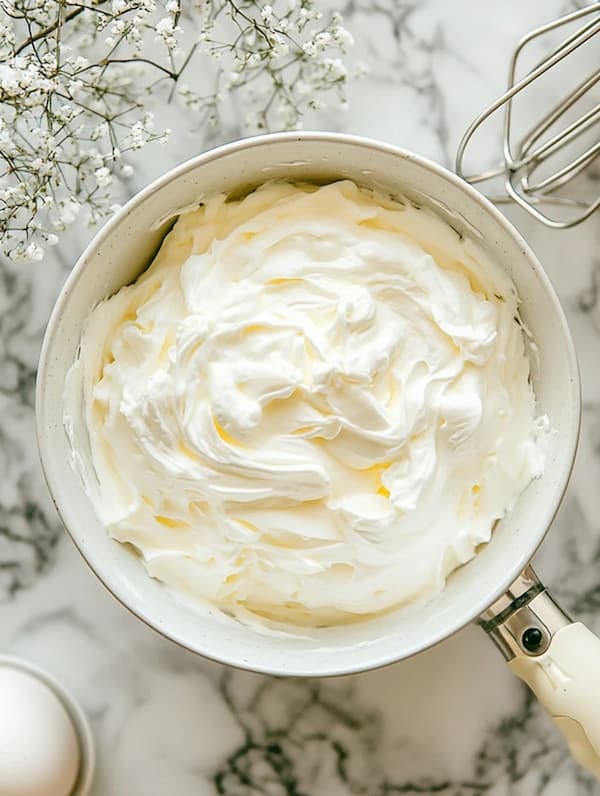
Keep the mixer running and start adding the remaining 3/4 cup of sugar. Do this very slowly, about one tablespoon at a time. If you dump it all in at once, the weight of the sugar will collapse the air bubbles you just spent five minutes making.
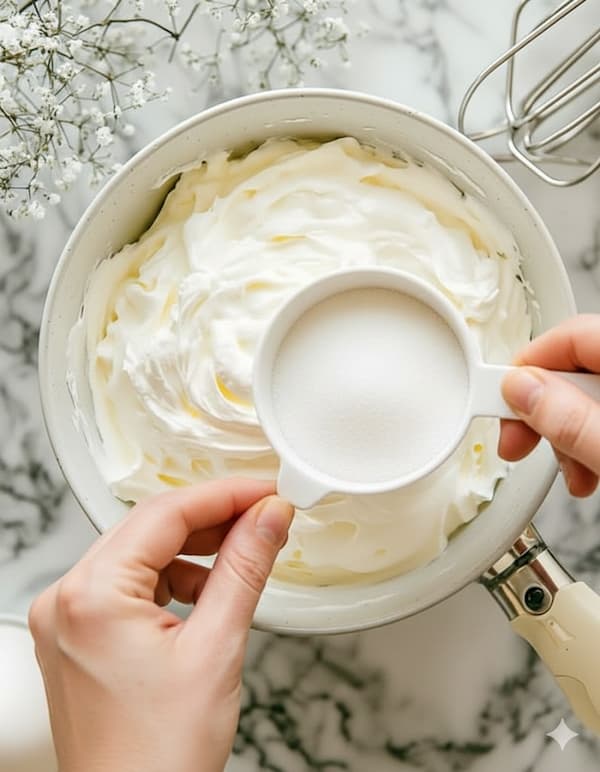
Continue beating until you reach “stiff peaks.” This means when you lift the whisk, the foam stands straight up like a mountain peak and doesn’t move. The foam should look glossy and thick, almost like shaving cream.
Hand Fold
This is the most critical part. Put the mixer away. Use a large rubber spatula to fold the flour and sugar mixture into the egg foam. Do this in four separate additions. Sprinkle a little flour on top, then gently cut down through the middle of the foam, sweep across the bottom, and fold over. Rotate the bowl and repeat.
Do not stir. If you stir, you will pop all the air bubbles. Stop the moment you no longer see white streaks of flour.
Gravity Bake
Gently spoon the batter into an ungreased 10-inch tube pan. Do not grease the pan. The cake needs to literally “climb” the walls of the pan to rise. If the walls are oily, the batter will just slip and stay flat. Bake at 350°F for 35 to 40 minutes.
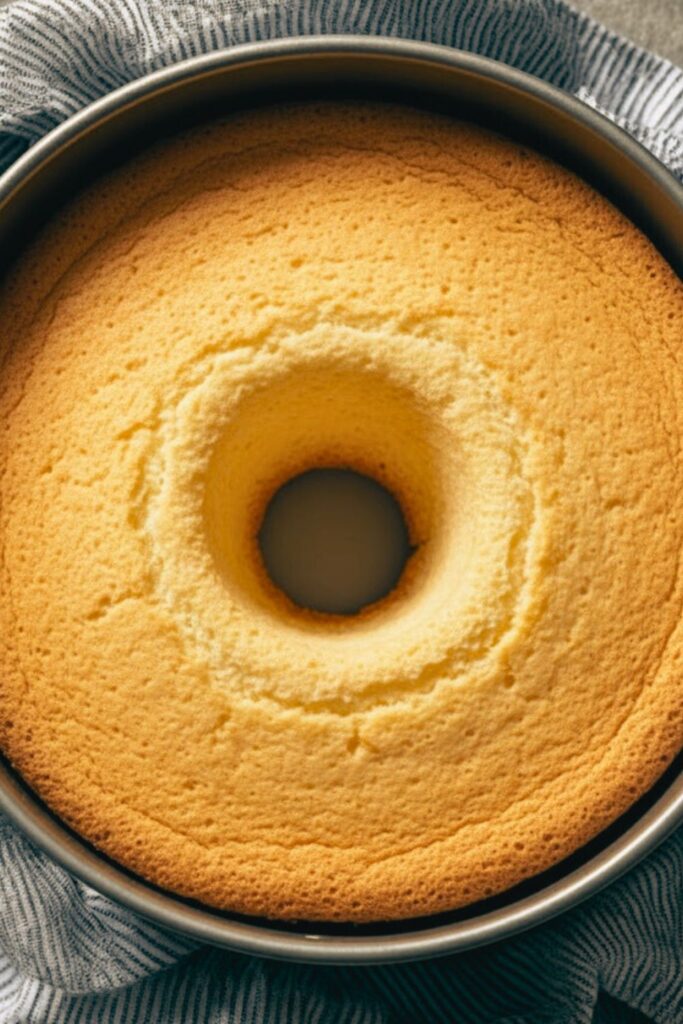
The top should be golden brown and the cracks should look dry. When you pull it out, immediately turn the pan upside down. Most tube pans have little “feet” for this purpose. Let it cool completely upside down for at least two hours.
Better Lift
The choice of flour is non-negotiable here. Cake flour is milled much finer than all-purpose flour and has less protein. This ensures the cake is tender rather than chewy.
If you only have all-purpose flour, you can make a substitute by removing two tablespoons of flour from every cup and replacing them with two tablespoons of cornstarch. Sift that together several times to make sure it is perfectly blended.
Also, pay attention to the almond extract. While vanilla is the main scent, the almond extract gives angel food cake that classic “bakery” taste that makes people want a second slice. It is a very strong flavor, so don’t be tempted to add more than the recipe calls for, or it will start to taste like cherry medicine.
Common Pitfalls
The most common disaster is the cake falling out of the pan while it cools upside down. This usually happens if the pan was greased or if the cake was underbaked. The cake needs to be firmly attached to the sides of the pan to support its own weight while it hangs.
Another issue is “deflating” the batter. If you are too aggressive when folding in the flour, the batter will lose its volume and turn into a liquid. If your batter looks like soup instead of a thick cloud, the cake will not rise.
Humidity is another silent enemy. If it is a very rainy or humid day, the sugar in the egg whites can absorb moisture from the air. This makes the meringue heavy and can lead to a sticky, weeping cake. If possible, try to bake this on a dry day, or keep your kitchen as cool and dry as possible.
Why Must The Pan Be Turned Upside Down To Cool?
An angel food cake has a very weak internal structure because it lacks the fat and flour strength of a regular sponge cake. As it cools, the air bubbles inside shrink. If the cake is sitting right-side up, the weight of the cake will cause it to collapse on itself, resulting in a dense, gummy texture.
By hanging it upside down, gravity actually pulls the cake away from the bottom of the pan, stretching those air bubbles as they set. This ensures the cake stays tall and maintains its signature “angelic” lightness.
How Do I Get The Cake Out Of The Pan Without Breaking It?
Once the cake is completely cold—and I mean cold to the touch, not just “not hot”—you can remove it. Run a long, thin knife or a metal spatula around the outer edge of the pan. Keep the knife pressed firmly against the metal to avoid cutting into the cake. Do the same thing around the center tube.
If your pan has a removable bottom, lift the center tube out. Then, run the knife along the bottom of the cake to release it from the base. It is a slow process, but rushing it will cause the sides of the cake to tear.
A Must-Try Cake
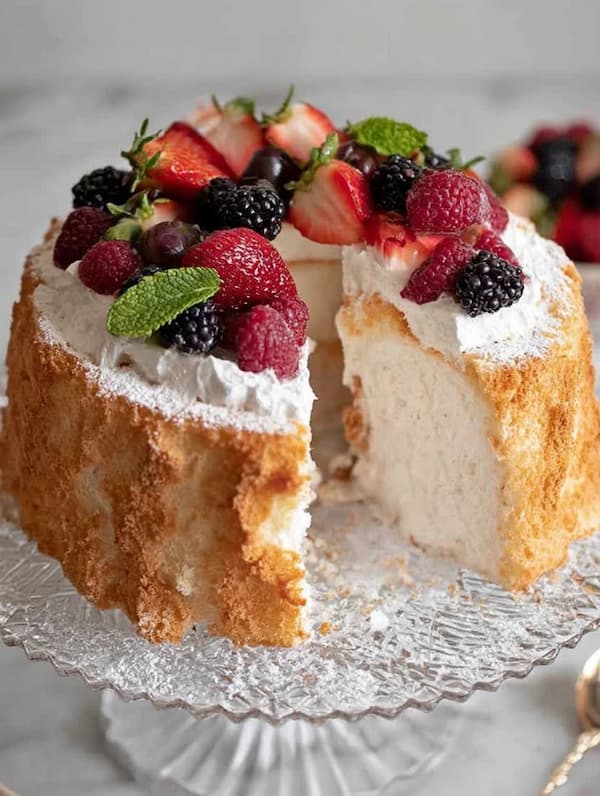
Angel food cake is a test of technique over ingredients. It shows that you don’t need a lot of expensive items to create something beautiful. It is the perfect base for a summer dessert when topped with macerated strawberries and a dollop of whipped cream.
While the rules about grease and folding might seem strict, they are there to help you succeed. Once you see that tall, golden cake come out of the oven, you will realize why it has been a favorite for so many years. It is a clean, honest dessert that never feels too heavy. It is a great skill for any baker to have in their repertoire, especially for birthdays or garden parties.
Ingredients
Method
- Start by mixing your cake flour and half of the sugar (3/4 cup) together. You need to sift this mixture at least twice. Sifting aerates the flour and makes it light enough to float on top of the egg foam. If you don’t have a sifter, a fine-mesh strainer works just as well. Set this dry bowl aside.
- Separate your eggs while they are cold, as the yolks are less likely to break. Room temperature whites stretch much better and create more volume than cold ones.
- Add the salt and the cream of tartar to your egg whites. Start your mixer on a medium-low speed. Once the whites look frothy, like the top of a beer, increase the speed to medium.
- When the whites start to form “soft peaks”—which means they look like waves that curl over—it is time to add the flavor. Mix in your vanilla and almond extracts.
- Keep the mixer running and start adding the remaining 3/4 cup of sugar. Do this very slowly, about one tablespoon at a time. Continue beating until you reach “stiff peaks.” This means when you lift the whisk, the foam stands straight up like a mountain peak and doesn’t move.
- Put the mixer away. Use a large rubber spatula to fold the flour and sugar mixture into the egg foam. Do this in four separate additions. Sprinkle a little flour on top, then gently cut down through the middle of the foam, sweep across the bottom, and fold over. Rotate the bowl and repeat. Do not stir. If you stir, you will pop all the air bubbles.
- Gently spoon the batter into an ungreased 10-inch tube pan. Bake at 350°F for 35 to 40 minutes. The top should be golden brown and the cracks should look dry.
- When you pull it out, immediately turn the pan upside down. Let it cool completely upside down for at least two hours.