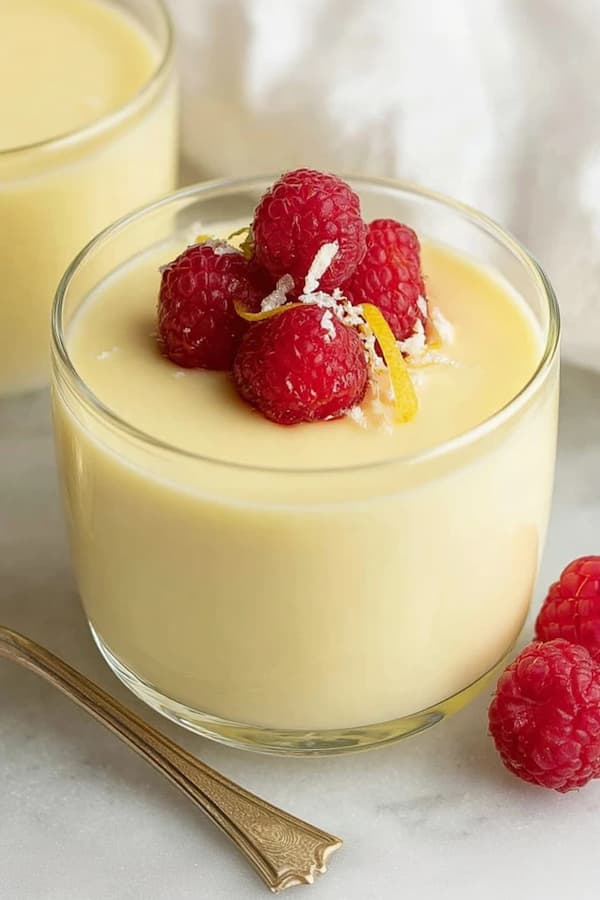
Lemon posset is a historic British dessert that relies on a magical chemical reaction between cream and citrus to create a silky, custard-like texture.
This recipe requires only three basic ingredients but results in a sophisticated treat that looks like it took hours to prepare. It is a reliable dessert for entertaining because it must be made in advance, leaving you free to enjoy your guests.
Ingredients
This recipe makes 4 servings, providing a light and zesty conclusion to any dinner party.
- 2 cups heavy cream (minimum 36% fat)
- 2/3 cup granulated white sugar
- 1/2 cup fresh lemon juice (about 3 large lemons)
- 1 tablespoon lemon zest
- Fresh berries or mint (for garnish)
The Magic
A top-notch lemon posset is a masterclass in simplicity. Unlike mousses or puddings that require eggs, gelatin, or cornstarch to thicken, the posset sets through the interaction of heat, sugar, and acid.
When you boil the cream with sugar, you are reducing the water content and stabilizing the proteins. Once the lemon juice is added, the acid causes those proteins to bond together, turning the liquid into a thick, velvety cream as it cools.
Using fresh lemons is the most important factor for success. The high acidity of fresh juice is necessary to trigger the setting process. Bottled juice often lacks the chemical punch needed to make the cream firm up properly.
This is the kind of recipe that rewards patience and quality over complex techniques. By following these straightforward steps, you can create a professional-grade dessert in your own kitchen.
Cream Boil
Start by pouring your heavy cream and granulated sugar into a medium saucepan. Set the heat to medium and stir constantly until the sugar has completely dissolved. You want to bring the mixture to a controlled, rolling boil. Watch the pot closely, as cream can expand and boil over the sides very quickly once it reaches a certain temperature.
Once the cream is boiling, turn the heat down slightly to maintain a steady simmer. Let it cook for exactly three minutes. This brief boiling period is essential because it changes the structure of the cream, allowing it to hold the lemon juice later without curdling into separate lumps. Use a timer to ensure you don’t cut this step short, as an under-boiled posset may remain liquid even after a night in the fridge.
Citrus Hit
Remove the saucepan from the heat immediately after the three minutes are up. Pour in the fresh lemon juice and the lemon zest. You will notice the mixture begins to thicken almost instantly as you stir the juice into the hot cream.
The zest adds those essential oils that provide a deep, aromatic lemon flavor that juice alone cannot provide.
Whisk the mixture gently for about thirty seconds to ensure the acid is evenly distributed. At this stage, the liquid will look like a thin custard. Do not worry if it still seems a bit runny; the true thickening happens during the cooling phase.
Letting the mixture sit in the pan for about five minutes before pouring helps the flavors settle and ensures the zest is well-incorporated throughout the liquid.
Fine Strain
For a truly top-notch and professional finish, you should pass the mixture through a fine-mesh strainer. This step removes the lemon zest and any tiny bubbles or film that may have formed during the boiling process.
While some people enjoy the texture of the zest, a strained posset has a much more luxurious, glass-like surface that melts on the tongue.
Set your strainer over a large glass measuring cup or a bowl with a pouring spout. Pour the warm cream through the mesh. You can use a spoon to gently push the liquid through, but do not force the solids.
This ensures your final dessert is perfectly smooth and uniform. This attention to detail is what separates a home-cooked meal from a high-quality blog recipe.
The Pour
Now you can divide the strained mixture into your serving vessels. Small glass ramekins, vintage teacups, or even hollowed-out lemon halves make for a beautiful presentation.
Because this dessert is very rich and creamy, a small portion is usually enough to satisfy a sweet tooth. Divide the liquid evenly among four containers.
If you see any tiny air bubbles on the surface after pouring, you can gently pop them with a toothpick or a clean pin.
This ensures the tops of your possets are smooth and shiny once they set. Leave the containers on the counter for about twenty minutes to reach room temperature before moving them to the refrigerator.
Cold Set
Place the possets in the refrigerator for at least four hours, though leaving them overnight is the best way to ensure a firm set. During this time, the proteins in the cream will finish their work, creating a texture that is denser than whipped cream but softer than fudge.
Cover them loosely with plastic wrap once they are cool to prevent them from absorbing any other smells from the fridge.
Right before serving, add your final touches. A few fresh raspberries or a sprig of mint on top provides a beautiful color contrast against the pale yellow cream.
The tartness of the berries complements the sweetness of the posset perfectly. Serve it cold, directly from the refrigerator, for the most refreshing experience.
Better Texture
To get a “top-notch” result, focus on the fat content of your cream. You must use heavy whipping cream or double cream with at least 36% fat. If you try to use half-and-half or light cream, there simply aren’t enough fat molecules to create a stable bond with the lemon juice.
The result will be a thin, milky liquid that refuses to set.
Another tip is the sugar balance. While 2/3 cup may seem like a lot, the sugar acts as a stabilizer for the cream. If you reduce the sugar too much, the acid from the lemon juice might cause the cream to “split” or curdle rather than thicken into a smooth custard.
Trust the ratio for your first batch, then make very small adjustments in the future if you prefer a more tart dessert.
Common Pitfalls
The biggest mistake is over-boiling the cream. If you let it boil for ten minutes instead of three, the cream can become too thick and may even develop a “cooked” or burnt milk flavor.
You want to hit that three-minute mark precisely to get the perfect balance of thickness and fresh dairy flavor.
Another issue is using a reactive pan. Always use a stainless steel or non-stick saucepan when working with lemon juice. If you use an unlined aluminum or copper pan, the acid in the lemon can react with the metal, giving your delicate dessert a metallic taste and a greyish tint.
A clean, non-reactive pot is essential for a bright and pure lemon flavor.
Why Is My Lemon Posset Not Setting?
If your posset is still liquid after four hours, it usually means the cream didn’t boil long enough or your lemon juice wasn’t acidic enough. If the cream doesn’t reach a full boil for at least three minutes, the proteins aren’t primed to bond with the acid.
Similarly, if your lemons were very old or sweet, they might lack the necessary pH level to trigger the thickening.
You can sometimes save a runny posset by gently reheating it, adding a teaspoon more juice, and letting it simmer for another minute, though a fresh start is usually more reliable.
Can I Use Different Citrus Fruits?
Yes, you can make a posset with other acidic fruits like limes or passion fruit. However, you must ensure the juice is acidic enough to curd the cream. Oranges or grapefruits are often too sweet and low in acid to work on their own.
If you want to make an orange posset, you will need to mix the orange juice with a bit of lemon juice to provide the necessary chemical kick. The ratio of liquid and sugar stays the same, allowing you to experiment with different “top notch” flavor profiles for your blog.
Final Thoughts
Lemon posset is proof that you don’t need a long list of ingredients to create a world-class dessert. By mastering the simple boil-and-set method, you can produce a treat that is both refreshing and deeply satisfying. It is a timeless recipe that highlights the beauty of fresh dairy and bright citrus.
Keep your cream fatty, your lemons fresh, and your boil timed. These simple rules are the key to a successful posset. It is a smooth, tangy, and elegant dessert that will impress anyone at your table.
Would you like me to show you how to make “Shortbread Cookies” to serve as a crunchy side, or would you prefer a recipe for a “Mixed Berry Compote” to spoon over the top?