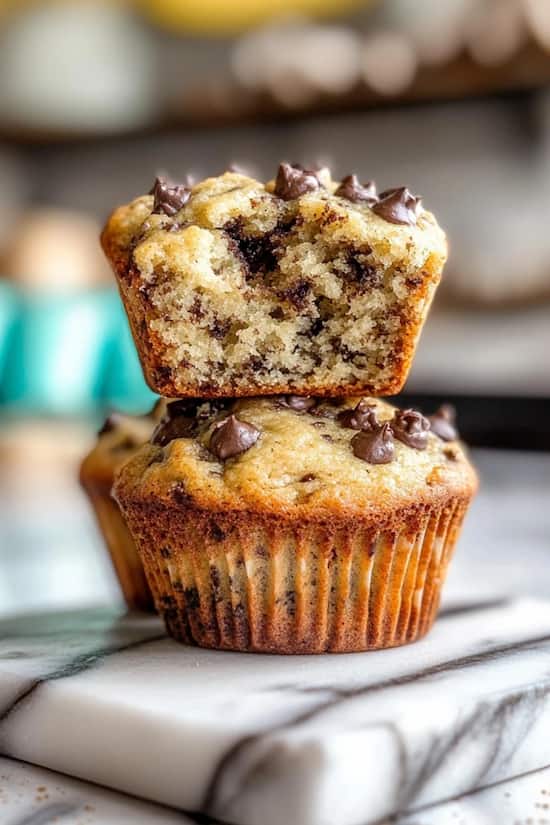
Banana nut bread is one of those recipes people come back to for years. It feels familiar, comforting, and reliable in a way few baked goods are. This version is simple, forgiving, and meant to fit into real kitchens without stress.
Why This Bread Works Every Time
Good banana nut bread doesn’t need fancy techniques. It needs ripe bananas, the right balance of moisture, and gentle handling.
This recipe leans into that idea. It’s built to be easy, flexible, and consistent — the kind of bread you make once and then remember without looking.
Ingredients
(Serves 10)
- 3 ripe bananas, mashed (serves 10)
- ½ cup melted butter (unsalted)
- ¾ cup granulated sugar
- 1 large egg
- 1 teaspoon vanilla extract
- 1 teaspoon baking soda
- ½ teaspoon salt
- 1½ cups all-purpose flour
- ¾ cup chopped walnuts or pecans
Start With the Bananas
The bananas matter more than anything else.
They should be very ripe — deeply spotted, soft, and fragrant. If they look too far gone, they’re probably perfect. Mash them until mostly smooth, with a few small lumps left behind.
Those little banana pockets add texture later.
Build the Batter Gently
Add the melted butter to the mashed bananas and stir until combined. Mix in the sugar, egg, and vanilla.
Sprinkle the baking soda and salt over the mixture and stir gently. Finally, fold in the flour just until no dry streaks remain.
Stop as soon as the batter comes together. Overmixing is the fastest way to dry bread.
Fold in the Nuts
Add the chopped nuts and fold them in lightly. They should be evenly distributed but not crushed into the batter.
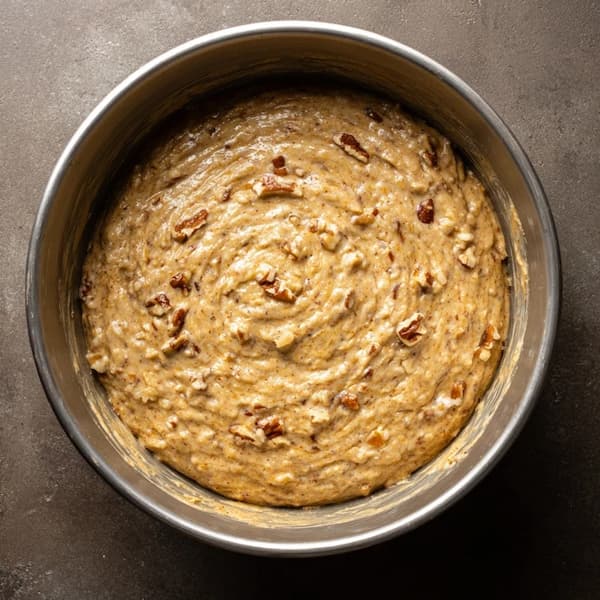
If you prefer larger chunks, keep the pieces bigger. If you want a smoother slice, chop them finer.
Both work — it’s personal.
Prepare the Pan
Grease a standard loaf pan or line it with parchment paper.
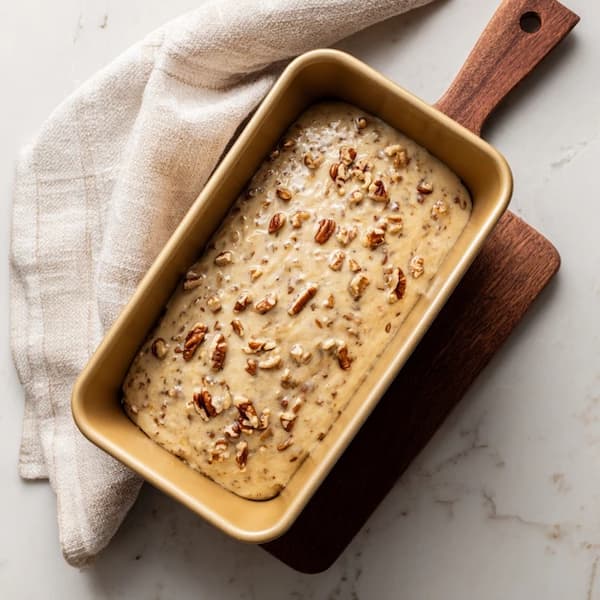
Pour the batter in and smooth the top gently. Don’t tap the pan aggressively; banana bread bakes best when the air stays inside.
Bake Slow and Steady
Bake at 350°F (175°C) for 50–60 minutes.
Start checking at 50 minutes. A toothpick inserted into the center should come out mostly clean, with a few moist crumbs.
If the top browns too quickly, loosely cover it with foil for the final stretch.
Let It Rest
This step is easy to skip and always regretted.
Let the bread cool in the pan for 10 minutes, then remove it and cool completely on a rack. The texture sets as it cools, and slicing too early can make it gummy.
Patience pays off here.
Texture You’re Aiming For
A good banana nut bread should be:
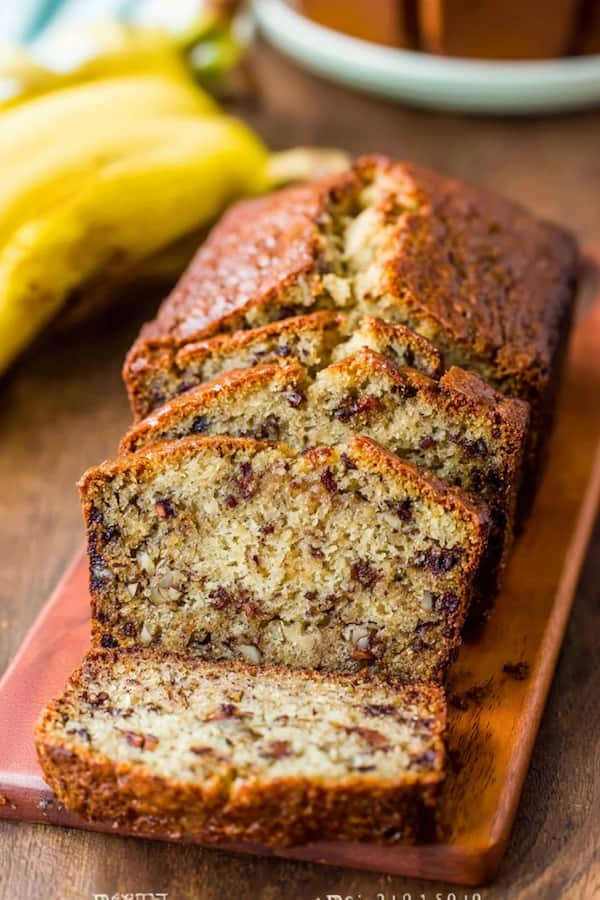
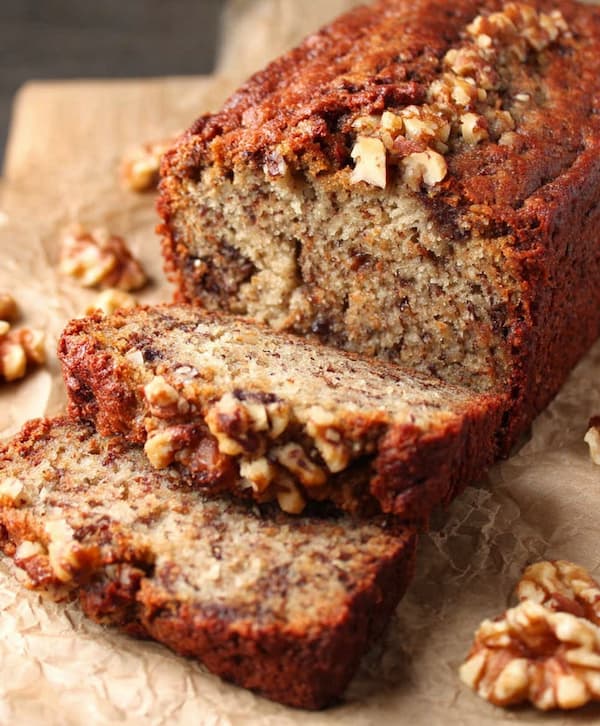
- Moist but not wet
- Soft with structure
- Lightly crisp at the edges
- Sliceable without crumbling
If it feels dense, it was overmixed. If it’s dry, the bananas weren’t ripe enough or it baked too long.
Small Tweaks That Keep It Classic
This recipe leaves room for gentle changes without losing its identity.
You can reduce the sugar slightly if your bananas are very sweet. Also,you can toast the nuts beforehand for deeper flavor and sprinkle a few nuts on top for texture.
Avoid adding too many extras — banana bread shines when it stays focused.
How to Store It Properly
Once fully cooled, wrap the bread tightly or store it in an airtight container.
It keeps at room temperature for 2 days, and up to 5 days in the refrigerator. The flavor actually improves by the second day as everything settles.
Can You Freeze Banana Nut Bread?
Yes, and it freezes beautifully.
Wrap the whole loaf or individual slices tightly and freeze for up to 3 months. Thaw at room temperature or warm gently.
Freezing doesn’t hurt the texture if the bread is wrapped well.
Why Banana Bread Sometimes Fails
Most issues come down to three things:
- Bananas not ripe enough
- Too much mixing
- Overbaking
This recipe avoids those traps by keeping things simple and forgiving.
When This Recipe Makes Sense
Banana nut bread fits just about anywhere:
- Breakfast with coffee
- Afternoon snack
- Light dessert
- Gift for friends
It doesn’t try to impress. It just quietly delivers.
Is Banana Nut Bread Better the Next Day?
Often, yes.
The crumb tightens slightly, the banana flavor deepens, and the nuts soften just enough. If you can wait overnight, it’s worth it.
Can You Make This Without Nuts?
Absolutely.
Simply leave them out and bake as written. The bread will still be moist, flavorful, and satisfying.
This base works with or without add-ins.
Why This Recipe Feels Familiar
It’s not trying to reinvent banana bread. It respects what already works.
The ratios are balanced. The steps are calm. The result feels homemade in the best way — not perfect, not flashy, just good.
Final Thought
Easy banana nut bread is about comfort, not complexity.
When you let ripe bananas do the work and don’t rush the process, the result is exactly what it should be: warm, familiar, and something you’ll want to make again without thinking twice.
Ingredients
Method
- Mash bananas until mostly smooth, with a few small lumps left behind.
- Add the melted butter to the mashed bananas and stir until combined. Mix in the sugar, egg, and vanilla.
- Sprinkle the baking soda and salt over the mixture and stir gently. Finally, fold in the flour just until no dry streaks remain. Stop as soon as the batter comes together.
- Add the chopped nuts and fold them in lightly. They should be evenly distributed but not crushed into the batter.
- Grease a standard loaf pan or line it with parchment paper. Pour the batter in and smooth the top gently. Don’t tap the pan aggressively; banana bread bakes best when the air stays inside.
- Bake at 350°F (175°C) for 50–60 minutes.
- Start checking at 50 minutes. A toothpick inserted into the center should come out mostly clean, with a few moist crumbs.