Buttermilk waffles represent the gold standard for a hearty, homemade weekend breakfast. The acidity in the buttermilk reacts with the baking soda to produce a tender, airy interior that is impossible to replicate with regular milk.
Follow this method to make sure every waffle comes out consistent, crisp, and ready for your favorite toppings.
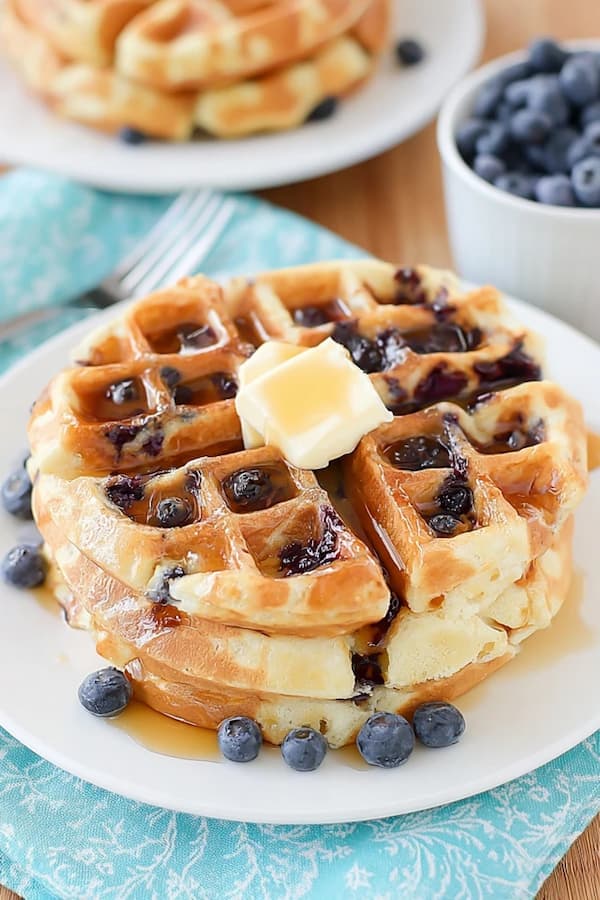
Ingredients
Yields: 8 to 10 standard waffles
- 2 cups all-purpose flour
- 2 tablespoons granulated sugar
- 1 tablespoon baking powder
- 1/2 teaspoon baking soda
- 1/2 teaspoon salt
- 2 cups buttermilk
- 1/2 cup unsalted butter, melted and cooled
- 2 large eggs
- 1 teaspoon vanilla extract
Mix the Dry
Start by grabbing a large mixing bowl. Add the flour, sugar, baking powder, baking soda, and salt. Use a whisk to combine these ingredients thoroughly for about thirty seconds.
You want to make sure the leavening agents are distributed evenly throughout the flour so you don’t get uneven bubbles in your waffles later. If you see any large lumps of baking soda, break them up with your fingers or the back of a spoon.
Whisk the Wet
In a separate medium-sized bowl, pour in the buttermilk and the melted butter. Crack your eggs into the mixture and add the vanilla extract.
Whisk this until the eggs are fully broken down and the butter is incorporated into the liquid. It is helpful to make sure your butter has cooled slightly before adding it to the eggs; if it is piping hot, it might scramble the eggs prematurely.
Combine with Care
Create a well in the center of your dry ingredients. Pour the liquid mixture into this well. Using a large spatula or a wooden spoon, fold the wet and dry ingredients together. You do not want to use a mixer here. Mix just until you no longer see streaks of dry flour.
The batter should look a bit lumpy. This is actually a good thing. If you mix until the batter is perfectly smooth, you will develop too much gluten, which results in a dense, chewy waffle rather than a light one.
Rest the Batter
This is a step most people skip, but it changes the final texture significantly. Let your bowl of batter sit on the counter for about ten to fifteen minutes while your waffle iron heats up.
This resting period allows the flour to fully hydrate and gives the baking powder and baking soda time to start their work. You will notice the surface of the batter getting slightly bubbly during this time, which is exactly what you want to see.
Heat the Iron
Preheat your waffle iron according to the manufacturer’s settings. If your iron has adjustable heat, set it to the medium-high range. A hot iron is the only way to get that crispy, golden-brown crust.
If the iron is not hot enough, the batter will stick and you will end up with a pale, soft mess instead of a crisp breakfast. Once the indicator light turns off or the iron feels ready, give the plates a light coating of non-stick spray or a thin brush of oil.
Pour and Cook
Use a ladle or a measuring cup to pour the batter onto the center of the iron. Do not overfill it, as the batter will expand and drip out the sides. Close the lid gently. Avoid the urge to open the lid too early. Let the waffle cook until the steam stops rising from the sides of the iron.
This usually takes about three to five minutes, depending on your specific machine. When it is ready, the waffle should lift easily without sticking.
Serve it Hot
Transfer the finished waffle to a cooling rack for thirty seconds before serving. Stacking them directly on a plate makes them steam and lose their crispness.
If you are cooking for a crowd, keep your finished waffles in a single layer on a baking sheet in a warm oven until everyone is ready to eat. This keeps them warm and maintains that crunchy exterior while you finish the rest of the batch.
Tips to Make it Perfect
- Don’t Over-Mix: A lumpy batter is a sign of a light, fluffy waffle.
- Cold Ingredients: If possible, let your buttermilk and eggs sit out for ten minutes before mixing to help them emulsify better.
- The “Doneness” Test: If you want a darker waffle, wait an extra thirty seconds after the steam stops before opening the lid.
- Oil vs Butter: Use a high-smoke-point oil like canola or vegetable oil to grease your iron; butter can burn and create a sticky residue that causes sticking in future batches.
Can I freeze these waffles?
Yes, you can freeze these waffles easily. Let them cool completely on a wire rack first. Once they are cold, place them in a freezer-safe bag with a piece of parchment paper between each one. You can keep them in the freezer for up to two months.
To reheat, do not put them in the microwave, as they will turn rubbery. Instead, place them directly into a toaster or a toaster oven set to a medium heat until they are warmed through and crispy again.
Why does my waffle iron stick?
If your waffles are sticking, it is usually due to one of two reasons: the iron is not hot enough, or the plates have lost their non-stick coating. Ensure you are preheating the iron for the full amount of time recommended by the manual. If you are using an older iron, you might need to brush a little bit of oil onto the plates before every single pour, rather than just the first one.
Also, check that you are waiting long enough for the waffle to fully cook; if you try to open the lid before the waffle is structurally sound, it will pull apart.
Ingredients
Method
- Start by grabbing a large mixing bowl. Add the flour, sugar, baking powder, baking soda, and salt. Use a whisk to combine these ingredients thoroughly for about thirty seconds. If you see any large lumps of baking soda, break them up with your fingers or the back of a spoon.
- In a separate medium-sized bowl, pour in the buttermilk and the melted butter. Crack your eggs into the mixture and add the vanilla extract. Whisk this until the eggs are fully broken down and the butter is incorporated into the liquid
- Create a well in the center of your dry ingredients. Pour the liquid mixture into this well. Using a large spatula or a wooden spoon, fold the wet and dry ingredients together. You do not want to use a mixer here. Mix just until you no longer see streaks of dry flour.
- Let your bowl of batter sit on the counter for about ten to fifteen minutes while your waffle iron heats up.
- Preheat your waffle iron according to the manufacturer’s settings. If your iron has adjustable heat, set it to the medium-high range.
- Use a ladle or a measuring cup to pour the batter onto the center of the iron. Do not overfill it, as the batter will expand and drip out the sides. Close the lid gently. Avoid the urge to open the lid too early. Let the waffle cook until the steam stops rising from the sides of the iron.
- Transfer the finished waffle to a cooling rack for thirty seconds before serving. Stacking them directly on a plate makes them steam and lose their crispness.
Notes
- Don’t Over-Mix: A lumpy batter is a sign of a light, fluffy waffle.
- Cold Ingredients: If possible, let your buttermilk and eggs sit out for ten minutes before mixing to help them emulsify better.
- The “Doneness” Test: If you want a darker waffle, wait an extra thirty seconds after the steam stops before opening the lid.
- Oil vs Butter: Use a high-smoke-point oil like canola or vegetable oil to grease your iron; butter can burn and create a sticky residue that causes sticking in future batches.