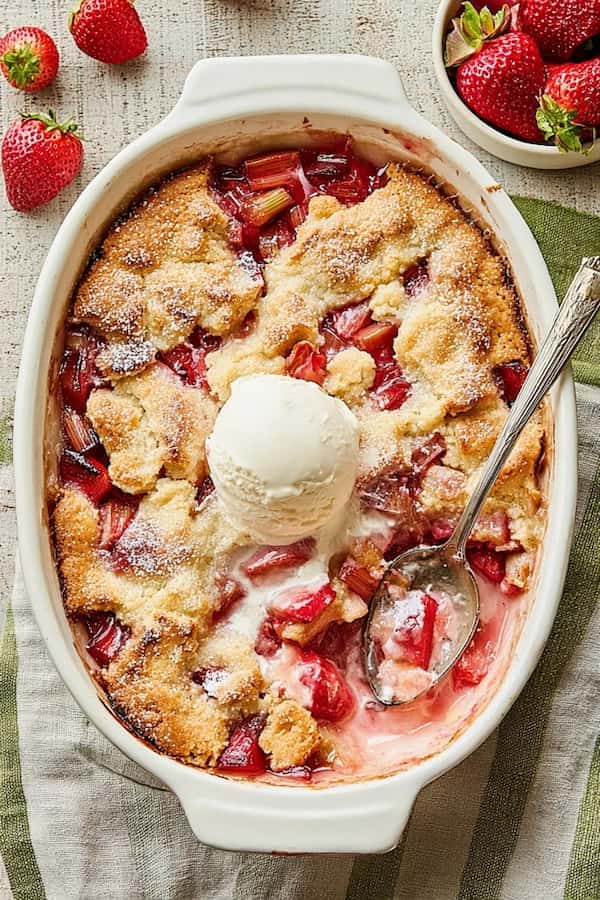
Strawberry rhubarb cobbler is the ultimate comfort dessert that celebrates the arrival of warmer weather. The tartness of the rhubarb balances perfectly with the natural sweetness of ripe strawberries under a golden biscuit topping.
It is a simple, rustic dish that tastes best served warm with a big scoop of vanilla ice cream.
Ingredients
Yields: 8 servings
The Fruit Base
- 4 cups fresh strawberries, hulled and halved
- 3 cups fresh rhubarb, cut into 1-inch pieces
- 3/4 cup granulated sugar
- 2 tablespoons cornstarch
- 1 tablespoon lemon juice
- 1 teaspoon vanilla extract
The Cobbler Topping
- 2 cups all-purpose flour
- 1/2 cup granulated sugar
- 2 teaspoons baking powder
- 1/2 teaspoon salt
- 1/2 cup unsalted butter, cold and cubed
- 3/4 cup heavy cream (plus extra for brushing)
- 1 teaspoon vanilla extract
- 2 tablespoons turbinado sugar (for crunch)
Heat the Space
Start by setting your oven to 375°F. While the oven is warming up, find a 9×13 inch baking dish or a deep 10-inch cast iron skillet. You don’t necessarily need to grease the dish because the fruit will release a lot of juice, but a little bit of butter on the sides doesn’t hurt.
Having the oven ready before you mix the dough is important because you want the baking powder to react immediately when the heat hits the cold butter.
Prep the Fruit
In a large mixing bowl, toss together your strawberries and rhubarb pieces. Add the sugar, cornstarch, lemon juice, and vanilla. Stir everything gently until the fruit is evenly coated in a glossy film.
The cornstarch is a vital ingredient here because rhubarb contains a massive amount of water. Without a thickener, your cobbler would turn into a fruit soup instead of a jammy delight. Let the fruit sit for ten minutes to macerate while you work on the dough.
Whisk the Dry
In a separate medium-sized bowl, combine your flour, sugar, baking powder, and salt. Use a fork or a whisk to blend them together until everything is uniform.
You want to make sure there are no clumps of baking powder hiding in the flour, as that can lead to bitter spots in the crust.
This dry mix is the foundation of your biscuit topping, so take a second to ensure it is well-combined before moving on to the fats.
Cut the Fat
Take your cold, cubed butter and drop it into the flour mixture. Use a pastry cutter or two knives to work the butter into the flour. You are looking for a texture that resembles coarse crumbs, with some pieces of butter still the size of small peas.
If the butter gets too warm, your topping will be oily rather than flaky. If you don’t have a pastry tool, you can use your fingertips to rub the butter in, but work quickly so the heat from your hands doesn’t melt it.
Bind the Dough
Pour the heavy cream and vanilla extract into the flour and butter mixture. Use a sturdy spoon or a spatula to stir until just combined. The dough should look a bit shaggy and moist, but it shouldn’t be as smooth as cake batter.
If you overwork the dough at this stage, the biscuits will come out tough and dense. You want to keep those little pockets of butter intact because they create steam in the oven, which makes the topping rise and stay light.
Layer the Dish
Pour your fruit mixture, including all the sugary liquid at the bottom of the bowl, into your baking dish. Spread it out so it forms an even layer. Now, take your dough and drop it over the fruit in large spoonfuls.
You don’t need to cover every single inch of the strawberries; leaving a few gaps allows the steam from the fruit to escape. These gaps also let the red juices bubble up through the crust, giving it a beautiful, rustic appearance.
Glaze and Sprinkle
Take a little bit of extra heavy cream and brush it over the tops of the dough mounds. This helps the crust turn a deep, golden brown.
Sprinkle the turbinado or coarse sugar over the top to provide a sweet crunch that contrasts with the soft fruit underneath. This small detail makes the cobbler look like it came from a high-end bakery.
Bake to Golden
Slide the dish into the oven and bake for 35 to 45 minutes. You are looking for two specific things: the fruit filling should be bubbling vigorously in the center, and the biscuit topping should be a rich gold color and firm to the touch.
If the top is browning too fast, you can cover it loosely with foil, but make sure the fruit is definitely bubbling. That bubbling action tells you the cornstarch has reached the right temperature to thicken the sauce.
Cool and Set
Once you pull the cobbler out of the oven, let it sit on the counter for at least 20 minutes. This is the hardest part of the process, but it is necessary.
As the cobbler cools, the fruit juices will continue to thicken into a sauce. If you scoop into it immediately, the liquid will run all over the plate. Serve it while it is still warm, ideally with a scoop of ice cream or a dollop of fresh whipped cream.
Can I use frozen fruit for this cobbler?
Yes, you can use frozen strawberries and rhubarb if fresh produce isn’t in season. There is no need to thaw the fruit before you use it, but you may need to add an extra tablespoon of cornstarch to account for the extra moisture frozen fruit usually releases.
You might also need to extend the baking time by about 5 to 10 minutes to make sure the center is fully heated through and the juices are bubbling.
How do I store leftovers?
If you have any cobbler left over, you can cover the dish with plastic wrap and keep it at room temperature for up to 24 hours.
For longer storage, put it in the refrigerator for up to three days. To reheat, it is best to put a portion in the oven or toaster oven at 350°F for a few minutes. This helps the biscuit topping regain some of its crispness, whereas a microwave will make the crust go soft and a bit soggy.
Ingredients
Method
- Start by setting your oven to 375°F. While the oven is warming up, find a 9×13 inch baking dish or a deep 10-inch cast iron skillet.
- In a large mixing bowl, toss together your strawberries and rhubarb pieces. Add the sugar, cornstarch, lemon juice, and vanilla. Stir everything gently until the fruit is evenly coated in a glossy film. Let the fruit sit for ten minutes to macerate while you work on the dough.
- In a separate medium-sized bowl, combine your flour, sugar, baking powder, and salt. Use a fork or a whisk to blend them together until everything is uniform.
- Take your cold, cubed butter and drop it into the flour mixture. Use a pastry cutter or two knives to work the butter into the flour. You are looking for a texture that resembles coarse crumbs. . If you don’t have a pastry tool, you can use your fingertips to rub the butter in.
- Pour the heavy cream and vanilla extract into the flour and butter mixture. Use a sturdy spoon or a spatula to stir until just combined. The dough should look a bit shaggy and moist, but it shouldn’t be as smooth as cake batter.
- Pour your fruit mixture, including all the sugary liquid at the bottom of the bowl, into your baking dish. Spread it out so it forms an even layer. Now, take your dough and drop it over the fruit in large spoonfuls.
- Take a little bit of extra heavy cream and brush it over the tops of the dough mounds. This helps the crust turn a deep, golden brown.
- Slide the dish into the oven and bake for 35 to 45 minutes. You are looking for two specific things: the fruit filling should be bubbling vigorously in the center, and the biscuit topping should be a rich gold color and firm to the touch.